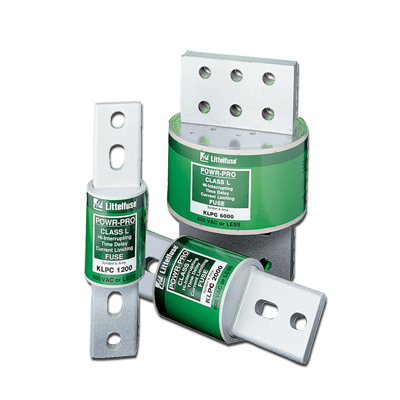
KLPC series POWR-PRO™ fuses provide ideal overcurrent protection for
circuits from 200 through 6000 amperes. KLPC series POWR-PRO™ fuses
specification-grade construction and performance meet or exceed the most
stringent project specifications: 99.9% pure silver links,
silver-plated copper end bells, glass-reinforced melamine bodies, O-ring
seals between body and end bells, and granular quartz fillers.
KLPC series POWR-PRO™ fuses are the only UL listed Class L fuses that
provide a minimum of ten seconds time delay at 500% rated current and
are also as current limiting as the fastest Class L fuse on the market.
On average, the peak let-through currents of KLPC series fuses are 10%
less than any other "time-delay" Class L fuse.
Applications:
Service switches
Switchboard mains and feeders
Bolted pressure contact switches
Motor control center mains
Large motor branch circuits
UL Listed series-rated protection for molded case circuit
breaker panelboards and loadcenters. (See panelboard manufacturers'
literature for recommended fuse rating).
Primary and secondary protection for transformers
Protection of power circuit breakers
Features:
Eliminate unnecessary downtime
KLPC POWR-PRO™ series fuses' time delay withstands system surges and keeps your circuits in service.
Best protection for system components
Maximum current limitation means less equipment and system
damage when short circuits occur. Reduced damage means that electrical
service can be restored quickly, reducing costly downtime, and often
permitting equipment repair rather than replacement.
Coordinates with other system components
KLPC series fuses provide maximum coordination with fuses and
circuit breakers both on the line and load side of the fuses. See the
Fuseology section of this catalog for additional information.
Eliminate need to oversize fuses
This may permit the use of smaller less expensive switches, and,
since the lower rated fuses are more current limiting, equipment
receives even better protection.
300kA Interrupting Rating
Littelfuse self-certified to 300,000 amperes as standard. Meets future trend towards higher available short circuit currents.